Acute injuries, chronic pain, post-surgical recovery, movement limitations, and complex presentations that require more than a generic protocol. Every condition gets a full 60-minute evaluation before any treatment plan is assigned. That's not a formality — it's how accurate diagnosis actually works.
These are the conditions most people associate with physical therapy: back pain, neck pain, joint pain, and the chronic tension that builds up over months or years. They're also the conditions most likely to be undertreated at high-volume clinics where every patient with low back pain gets the same handout and the same ten exercises.
Low back pain and lumbar disc issues, including herniated and bulging discs. Neck pain, cervicogenic headaches, and thoracic stiffness. Shoulder impingement, rotator cuff tears, and frozen shoulder. Hip pain, SI joint dysfunction, and piriformis syndrome. Knee pain, including patellofemoral syndrome and IT band syndrome. Plantar fasciitis and foot or ankle pain. Temporomandibular joint dysfunction (TMJ).
Learn more →If you've been managing one of these conditions for months — or you've already done PT elsewhere without lasting results — the issue is usually not the diagnosis. It's that the treatment didn't address the actual driver of your pain. A thorough evaluation changes that.
Learn more →Instrument-assisted mobilization. Tools earn their place when they outperform hands, and we explain when and why.
Learn more →Decompression-based fascial work for adhesions and restricted planes, delivered within a clinical PT plan.
Learn more →Treats the kinetic chain, not the symptom. Plantar fascia pain that lives in the calf, and vice versa.
Learn more →Manual therapy isn't one-size-fits-all. We pick the right modality after assessing what's actually restricted, not by default.
Request a screen →Some patients come in with a clear diagnosis. Others come in knowing something is wrong with how they move — they're stiff, compensating, or losing ground on activities they used to do without thinking. Both are valid starting points.
Postural dysfunction from prolonged desk work or repetitive occupational demands. Scoliosis management in adolescents and adults. Hypermobility and instability affecting daily function. Gait abnormalities and movement compensations following injury. Pelvic floor dysfunction, lumbopelvic instability, and prenatal or postpartum musculoskeletal conditions. Balance and coordination deficits.
Learn more →Movement problems rarely stay contained to one area. A hip that doesn't load correctly puts stress on the knee. A stiff thoracic spine forces the shoulder to compensate. Treating the symptom site in isolation is exactly why so many patients cycle through PT without resolution.
Learn more →One-on-one strength & conditioning with a clinician who knows your history and limits.
Learn more →Global postural decompensation. An Italian-developed method few clinics in the U.S. offer.
Learn more →Re-pattern how you squat, hinge, reach, and load so injuries don't return on day one back.
Learn more →The performance side is where we bridge clinical care to real life. We coordinate with your coach or trainer when it helps.
Plan a return →Athletes and active patients have specific demands: they need to know when they can return to training, what they can do in the meantime, and whether the rehab plan accounts for the actual loads their sport or activity places on the body.
ACL tears and post-surgical ACL reconstruction rehab. Rotator cuff tears and post-surgical shoulder rehab. Muscle strains and tendinopathies, including Achilles, patellar, and hamstring. Stress fractures and overuse injuries. Post-surgical rehabilitation following joint replacement, spinal procedures, and soft tissue repairs. Chronic muscle tightness, trigger points, and myofascial restrictions that limit performance or cause recurring pain.
Learn more →For post-surgical cases, we coordinate directly with your surgeon or orthopedic physician. You don't have to be the go-between. We work from the surgical report, communicate with your care team, and progress your rehab in line with what your tissue can actually handle at each stage.
Learn more →ACL, rotator cuff, joint replacements. We coordinate directly with your surgeon and follow their protocol.
Learn more →Every patient starts with a 60-minute one-on-one evaluation. No assistants. No rotating staff. The same doctoral-level physical therapist — DPT, OCS, FAAOMPT, with 15 years of clinical experience — conducts your assessment and delivers your care from the first session to the last.
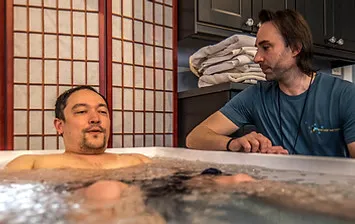
Chain clinics apply templates. A patient comes in with back pain, gets a McKenzie protocol, and sees a different tech each visit. That model works fine for straightforward cases. It fails the patients who are more complex, more chronic, or who've already been through that process without getting better.
Learn more →If you've been through the PT mill and want something that actually works, you're in the right place. The evaluation isn't a billing formality — it's a clinical process that determines what's actually driving your problem and what treatment approach is most likely to resolve it.
Learn more →If you know what you're dealing with, book your one-on-one evaluation directly. If you're not sure whether PT is the right fit for your condition, request a consultation first — a brief conversation to make sure you're in the right place before you commit to a full session.
What types of conditions does physical therapy treat? Physical therapy addresses musculoskeletal pain, movement dysfunction, post-surgical recovery, neurological conditions affecting movement, and chronic soft tissue problems. At Physica Medica specifically, the clinical focus is on conditions where hands-on treatment, movement retraining, and targeted exercise produce measurable results — not conditions that need medical management or imaging first.
How do I know if my condition is right for physical therapy? If your problem involves pain, stiffness, weakness, limited range of motion, or difficulty with movement or daily activity, PT is worth evaluating. The honest answer is that the initial assessment will tell you more than a website can. If PT isn't the right fit, you'll hear that clearly at the evaluation — along with a recommendation for what is.
Do I need a referral to be seen? No. Maryland is a direct-access state, which means you can schedule directly with a physical therapist without a physician referral. Some insurance plans still require one for reimbursement purposes, so it's worth checking your specific plan before your first visit. We can help clarify that when you call.