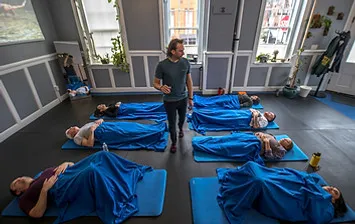
Fourteen services across four clinical categories. Every session is one-on-one with a fellowship-trained DPT. Browse by category or, if you're not sure where to start, request a free 30-minute movement screen.
Five hands-on modalities that share a single clinical aim: restore soft-tissue mobility so movement and strength work can actually take hold. Each is performed by a DPT trained in that specific technique, not delegated to a tech.
Precise trigger-point release for stubborn knots and chronic tension that pure hands-on work can't reach.
Learn more →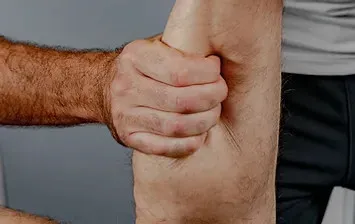
Targeted soft-tissue work for athletes and chronically tight desk workers. Clinical, not spa.
Learn more →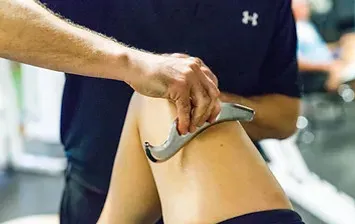
Instrument-assisted mobilization. Tools earn their place when they outperform hands, and we explain when and why.
Learn more →Decompression-based fascial work for adhesions and restricted planes, delivered within a clinical PT plan.
Learn more →
Treats the kinetic chain, not the symptom. Plantar fascia pain that lives in the calf, and vice versa.
Learn more →Manual therapy isn't one-size-fits-all. We pick the right modality after assessing what's actually restricted, not by default.
Request a screen →Five services that rebuild functional capacity once tissue mobility is restored. The gap most patients fall into, between the last PT session and being ready to load again, closes here.
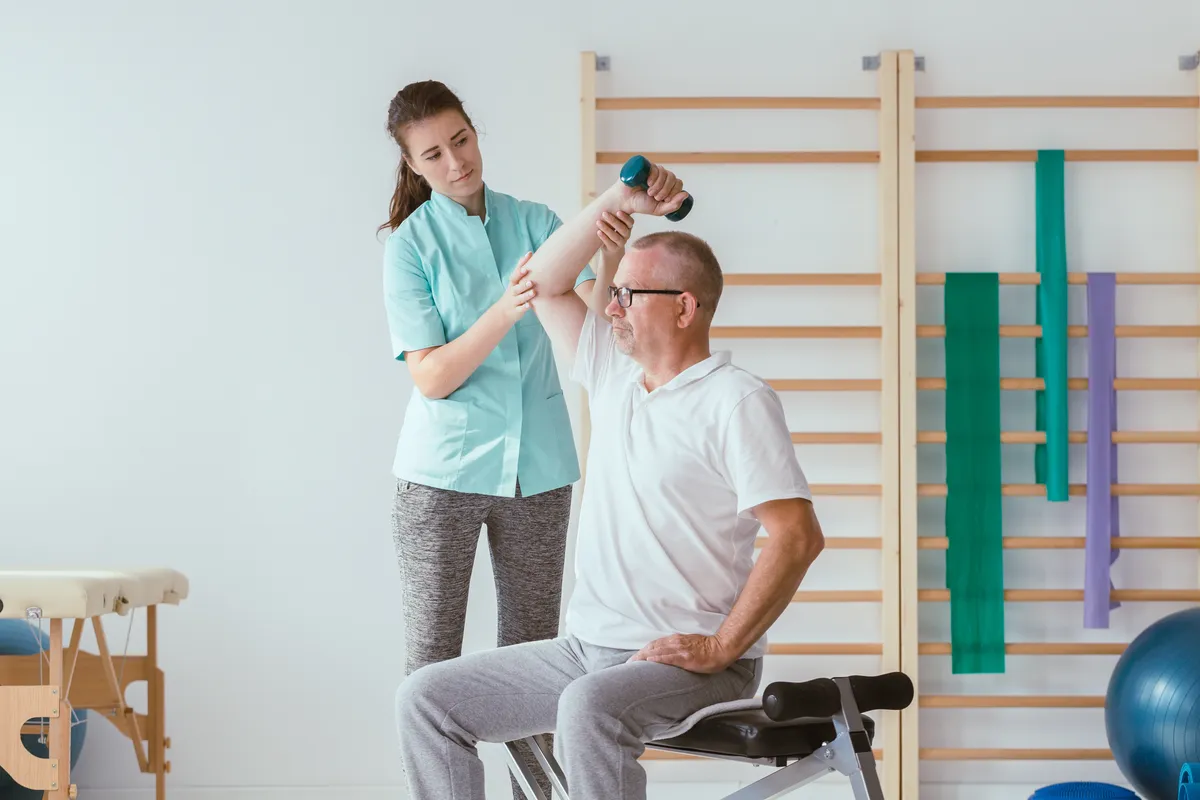
Progressive loading supervised by a DPT. Bridges the rehab-to-weight-room gap.
Learn more →Specific reset for desk-driven compensations. Not a generic stretch list.
Learn more →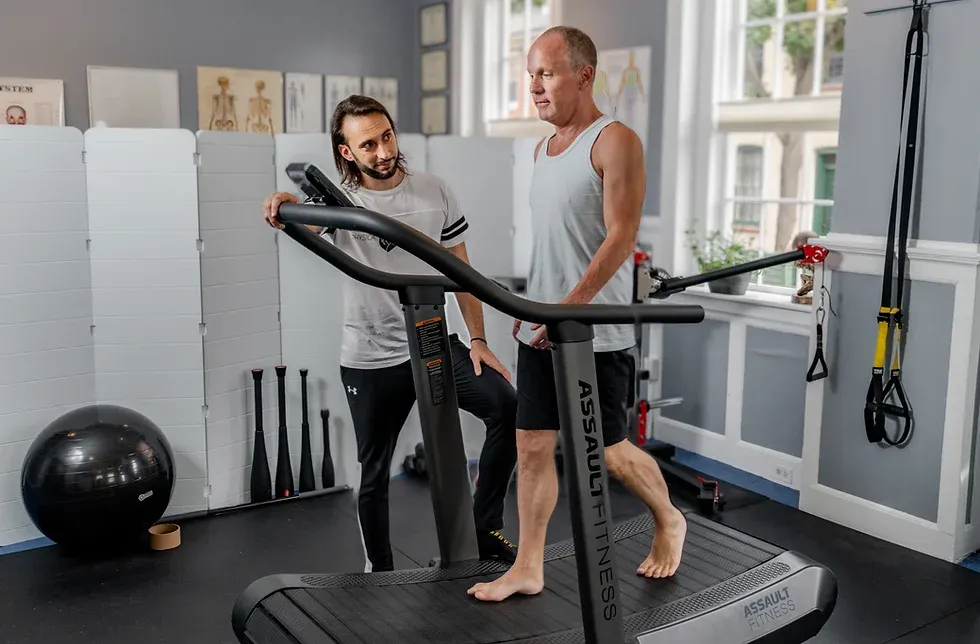
One-on-one strength & conditioning with a clinician who knows your history and limits.
Learn more →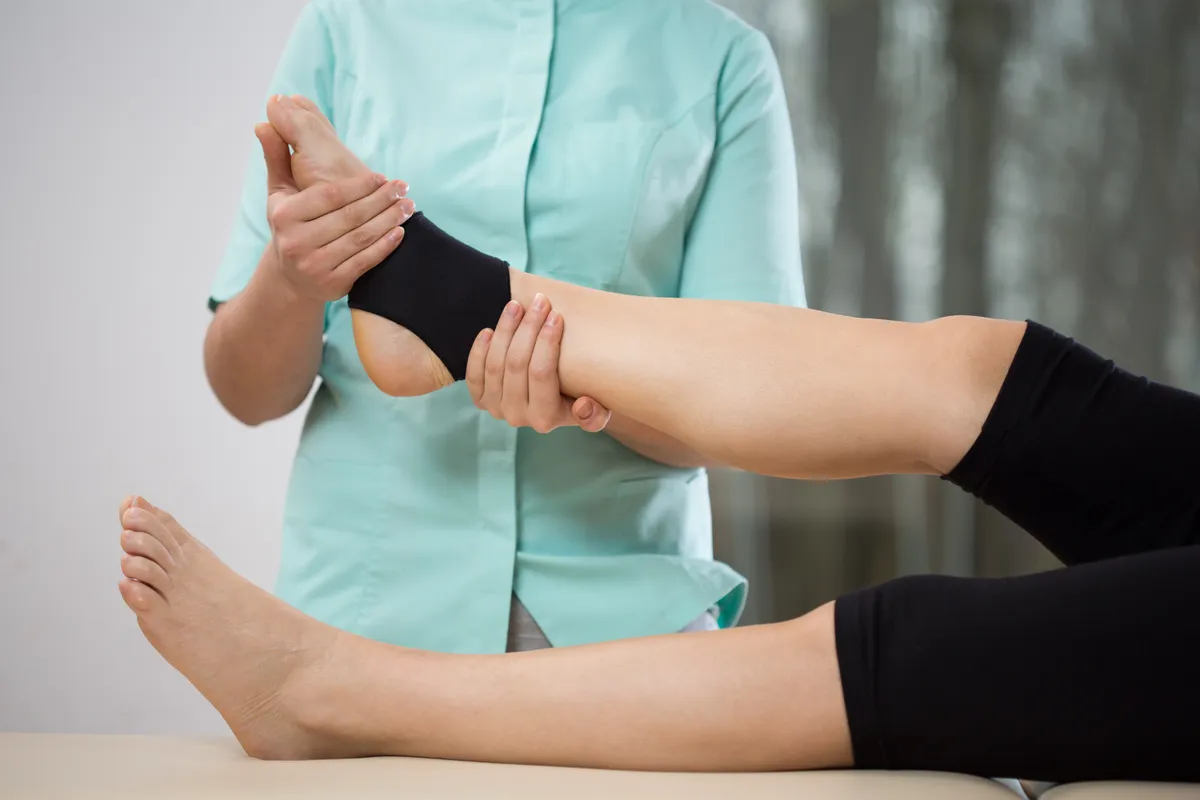
Global postural decompensation. An Italian-developed method few clinics in the U.S. offer.
Learn more →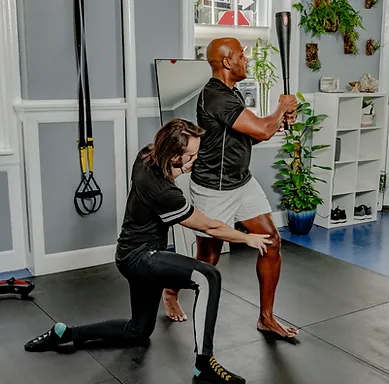
Re-pattern how you squat, hinge, reach, and load so injuries don't return on day one back.
Learn more →The performance side is where we bridge clinical care to real life. We coordinate with your coach or trainer when it helps.
Plan a return →Three clinical programs for populations and conditions that require dedicated training, not bolt-on services. Our specialists hold the matching credentials (OCS, SCS, CLT, Schroth) and coordinate with your surgeon or specialist when appropriate.
Pelvic floor, lumbopelvic and SI joint care through every trimester, and postpartum return-to-loading.
Learn more →Curve-specific exercise and manual therapy for adolescents and adults managing scoliosis long-term.
Learn more →ACL, rotator cuff, joint replacements. We coordinate directly with your surgeon and follow their protocol.
Learn more →These are not core clinical services. They're focused programs we offer when patients want to extend the work they're already doing in PT, or want a clinical context for breathwork and cold exposure they've read about elsewhere.
Acute injuries, chronic pain, post-surgical recovery, and the things that haven't responded to anything else. If you're not sure your case fits, a movement screen sorts it out.
Most patients arrive somewhere on a spectrum. They know they have a problem, they have a vague sense of what might help, and they don't want to commit financially before they're sure. The free 30-minute movement screen exists exactly for that.
A doctoral-level therapist walks through your history, watches you move, and gives you a clear recommendation: which service fits, how many sessions you'll likely need, what insurance might cover. No obligation. No upsell. Just a clinician's read on what you actually need.
Most cases don't fit neatly into one service. A herniated disc might need manual therapy first, then dry needling for residual trigger points, then strength training to keep the gains. The decision is clinical. We make it during your first visit, or during a free 30-minute movement screen if you'd prefer not to commit to a full assessment yet.
Yes, and most patients do. A typical 60-minute session might include manual therapy, dry needling for a specific trigger point, and movement work to integrate the gains. You're paying for time with a clinician, not for individual modalities billed separately. The therapist chooses what's appropriate that visit.
No. Maryland is a direct-access state, which means you can see a physical therapist without a doctor's referral. If your insurance plan requires one for reimbursement, we'll tell you upfront. Bring any imaging or surgical notes you have so we have the full picture from day one.